
Mind Mapping for Self-Learning: Visual Techniques to Organize and Retain Information Effectively
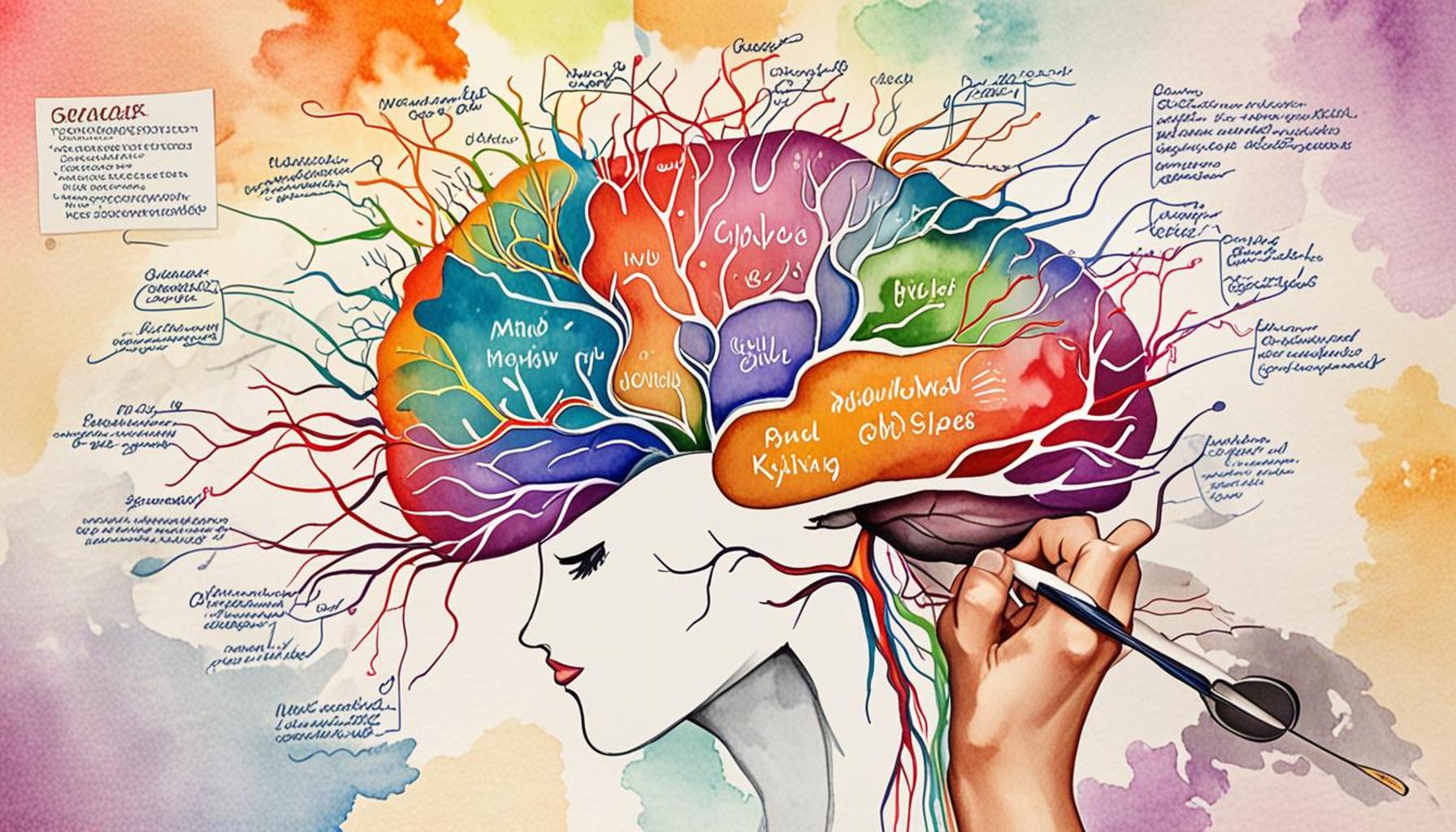
Unlocking the Power of Visual Learning
In today’s fast-paced world, self-learning has become an essential skill for personal and professional growth. As the educational landscape evolves, a vast array of tools and techniques are emerging to enrich the learning experience. Traditional methods of studying, such as rote memorization or linear note-taking, often fall short in helping individuals retain and organize information effectively. Enter mind mapping, a dynamic and visual approach that transforms the way we learn and understand complex topics. This innovative technique not only facilitates comprehension but also empowers learners to take charge of their educational journeys.
What is Mind Mapping?
Mind mapping is a technique that utilizes diagrams to represent ideas and concepts, enabling learners to see connections and relationships clearly. Unlike conventional notes that can become overwhelming, mind maps offer a structured and vibrant visual format that enhances understanding. Some key features include:
- Visual Organization: Ideas are structured in a visually appealing way that makes recall easier. For instance, using colors, symbols, and images can create a more engaging presentation of information compared to standard text.
- Engagement: It encourages active participation, helping learners stay focused. Engaging with the content actively can spark interest, making education more enjoyable and effective.
- Flexibility: Mind maps can be adapted to any topic or field, from science to arts. Whether brainstorming ideas for a research project or summarizing a novel, mind maps can be tailored to individual preferences.
Studies show that our brains are wired for visual processing, allowing us to absorb information more efficiently when it’s presented in a graphic format. By employing mind mapping, learners can unlock their potential to:
- Enhance Memory: Visual depiction aids memory retention significantly. A study by the University of Leeds found that students who used mind maps retained information at least 20% better than those who used traditional study methods.
- Boost Creativity: The unrestricted layout encourages out-of-the-box thinking. Mind maps allow learners to explore associations that might not be immediately evident, fostering creativity.
- Streamline Learning: It simplifies complex ideas into digestible parts. Breaking down information into visual segments makes it easier for the brain to process and recall.
Incorporating mind mapping into your studying routine can be a game changer. Whether you are a student preparing for exams, a professional seeking to master a new skill, or anyone looking to expand their knowledge, mind mapping provides you with the tools to organize and retain information with ease. Join us as we explore how mind mapping can elevate your self-learning journey. From techniques to tips, discover new strategies that will help you harness the power of your mind and tap into your fullest potential.
LEARN MORE: Click here to dive deeper
Harnessing Mind Mapping Techniques for Effective Learning
As individuals increasingly seek to take charge of their education, mind mapping emerges as a powerful tool that caters to various learning styles. The beauty of this method lies in its ability to convert thoughts into a visual language that resonates with how we naturally process information. This section will delve deeper into the techniques that can maximize the benefits of mind mapping, transforming abstract concepts into concrete understanding.
Creating Your Mind Map
The first step in utilizing mind mapping involves crafting your own map. Here’s a straightforward process to guide you:
- Start with a Central Idea: Select the primary topic or concept you want to explore. This will sit at the center of your mind map, allowing for easy branching of related ideas.
- Add Branches for Subtopics: From your central idea, draw lines extending outward to represent key themes or subtopics. Each branch can signify a category or concept related to the main idea.
- Use Keywords: Rather than full sentences, use keywords or short phrases on each branch. This brevity keeps the mind map uncluttered and ensures focus on the main concepts.
- Incorporate Visual Elements: Enhance your mind map by adding colors, symbols, and images. These visual cues not only beautify your map but also reinforce memory through association.
- Review and Refine: Once your mind map is complete, take a moment to review it. Adjust or reorganize branches as needed to improve clarity and ensure that all important aspects of the topic have been addressed.
A study published in the journal Procedia – Social and Behavioral Sciences demonstrated that students who engaged with mind mapping during their revision performed better in assessments compared to those using standard study techniques. This indicates that the visual nature of mind maps aids in enhancing both understanding and retention.
Applying Mind Mapping Across Disciplines
One of the key advantages of mind mapping is its versatility. You can apply this technique across various disciplines, whether in academic settings or the professional arena. Here are some examples:
- Academic Learning: Students can utilize mind mapping for summarizing chapters from textbooks, outlining essays, or brainstorming project ideas. This allows for a more organized approach to studying, making complex material easier to manage.
- Workplace Projects: Professionals can apply mind mapping during team meetings to capture ideas or create project plans. It can help visualize project timelines, responsibilities, and key objectives, facilitating improved collaboration.
- Personal Development: Individuals seeking to plan personal goals can create mind maps that lay out vision boards, course objectives, or even life milestones. This personal touch can provide motivation and clarity on the path ahead.
As you begin to experiment with mind mapping, you may find that it not only enhances your learning experience but also cultivates a deeper connection with the material at hand. By mapping knowledge visually, you unlock the innate potential of your brain to organize, retain, and apply information effectively. So, whether you are navigating a complex subject in school or tackling a professional challenge, integrating mind mapping into your toolkit can lead to remarkable growth and understanding.
| Advantage | Impact on Learning |
|---|---|
| Promotes Active Engagement | Mind mapping requires learners to visualize and connect ideas, fostering deeper cognitive processing. |
| Enhances Memory Retention | Utilizing visual elements helps create mental images, making information more memorable and easier to recall. |
| Facilitates Organization of Information | Mind maps provide a structured overview, allowing for better categorization and retrieval of knowledge. |
| Encourages Creativity | The free-flowing nature of mind mapping nurtures out-of-the-box thinking and innovative problem-solving. |
The use of mind mapping in self-learning environments promotes a dynamic approach, converting passive consumption into active involvement. With keys to success being interactivity and visual appeal, learners find that mind maps not only engage them but also help solidify the knowledge they’ve gained. By organizing thoughts visually, they establish meaningful relationships between concepts, transitioning seamlessly from idea generation to structured learning.Notably, mind mapping can be a significant benefit in diverse educational settings, from individual study sessions to collaborative brainstorming activities. As individuals harness the techniques of visual mapping, they unlock new dimensions in their understanding and retention of information—a must-know skill in today’s fast-paced world. Delving deeper into this visualization method could provide powerful strategies for enhancing personal educational experiences.
DISCOVER MORE: Click here for valuable insights
Maximizing Mind Mapping for Enhanced Learning Outcomes
While the basic process of creating a mind map is essential, there are advanced strategies that can further enhance the effectiveness of this visual learning technique. Engaging in these strategies not only optimizes your learning experience but also transforms the way you interact with information.
Integrating Technology into Mind Mapping
In today’s digital age, leveraging technology can take your mind mapping to the next level. Various mind mapping software and applications available for both desktop and mobile devices allow for more dynamic and flexible mapping. Tools like XMind, MindMeister, and Coggle provide user-friendly interfaces and collaborative features, enabling users to share their maps with classmates or colleagues in real time. This collaborative aspect can foster engaged teamwork, particularly for group projects or brainstorming sessions, leading to enriched ideas and shared creativity.
Moreover, many of these platforms allow for the integration of multimedia elements. Incorporating audio notes, video links, or even interactive quizzes directly into your mind map makes your study process more engaging. For example, a mind map on historical events may include links to documentaries or podcasts that relate to the topics, making the learning experience more holistic and stimulating.
Utilizing Mind Mapping for Revision and Recall
Mind mapping is also an excellent tool for not just comprehension but also for revision and recall. As exams approach, students can create mind maps that encapsulate an entire syllabus in a visual format, grouping topics and key ideas. Color coding subjects or themes can enhance memory retention, as studies have shown that color can influence cognitive processing and recall.
Additionally, employing the technique of spaced repetition along with mind maps can yield remarkable results. After building your mind map, revisit it periodically—every few days or weeks. This technique aids in solidifying the material in long-term memory and helps reduce the anxiety that often accompanies last-minute cramming.
Expanding Critical Thinking Skills Through Mind Mapping
Engaging with mind maps not only aids in retaining factual information but also promotes critical thinking and creativity. By mapping out relationships between concepts, learners can identify patterns, draw connections, and generate new ideas. This is particularly beneficial in disciplines such as science and philosophy, where synthesizing information from various sources is crucial. Creating a mind map that showcases different theories on a subject allows for a comparative analysis, enhancing one’s ability to discuss and critique the material more effectively.
A significant study published in the Journal of Educational Psychology highlighted that students who used mind mapping techniques displayed greater creative thinking skills and problem-solving abilities than their peers who relied on traditional methods. This suggests that beyond mere organization, mind mapping encourages a deeper level of cognitive engagement that can be critical in academic success.
Customizing Your Mind Maps for Personal Learning Styles
The effectiveness of mind mapping is further amplified when you tailor your approach to fit your unique learning style. Visual learners may prefer colorful images and detailed illustrations, while kinesthetic learners could benefit from physically creating their maps using sticky notes or drawing on large whiteboards. Auditory learners can vocalize their thought processes or discuss their mind map with a study group to reinforce their understanding.
By adapting your mind mapping technique to your personal preferences and needs, you can create a system that not only resonates with you but also fosters meaningful learning and retention.
In summary, leveraging technology, incorporating revision strategies, honing critical thinking skills, and customizing mind maps are powerful ways to elevate the mind mapping experience. By employing these methods, you will not only organize your thoughts effectively but also cultivate a robust understanding of your subject matter.
LEARN MORE: Click here to discover the benefits of learning communities
Conclusion: Unlocking the Power of Mind Mapping for Lifelong Learning
In conclusion, mind mapping emerges as a transformative tool for self-learning, offering a dynamic approach to organizing and retaining information effectively. By combining visual elements with structured thinking, learners are empowered to grasp complex concepts, enhance critical thinking, and foster creativity. The strategies discussed throughout this article—such as integrating technology, employing revision techniques, and customizing maps for individual learning styles—provide a comprehensive framework for maximizing the benefits of mind mapping.
As the education landscape continues to evolve, embracing digital tools like mind mapping software can create a collaborative and interactive learning environment. This opens up avenues for shared insights and innovative ideas that can enhance understanding further. Additionally, remembering to revisit mind maps through spaced repetition not only solidifies knowledge but eases the often overwhelming pressure of exam preparation.
Moreover, the real beauty of mind mapping lies in its adaptability; it caters to diverse learning styles, making it a universally beneficial technique. Whether you are a visual learner, a hands-on practitioner, or an auditory processor, modifying your mind maps according to your preferences can significantly improve your retention and comprehension.
Ultimately, mind mapping is more than just an organizing tool—it’s a way to cultivate an engaging, thoughtful, and effective learning journey. As you embark on your path of self-learning, invest time in exploring the depths of mind mapping and witness firsthand how these visual techniques can revolutionize the way you absorb and apply information.